Burundi
Exalt is actively engaged here. Political and economic context, checked in October 2026.
Facts verified on 2026-10-21. Office holders and election dates change; check before relying on them.
Burundi is a presidential republic. Under the 2018 Constitution the President is elected for a seven-year term and is head of state, while a Prime Minister heads the government. President Évariste Ndayishimiye took office in 2020, and the ruling CNDD-FDD named him its candidate for the presidential election set for 3 May 2027. The CNDD-FDD won every directly elected seat in the June 2025 National Assembly election, a result that opposition parties and some observers disputed. Nestor Ntahontuye, a former finance minister, became Prime Minister in August 2025. The economy faces foreign currency shortages, fuel shortages and high inflation, although inflation fell to about 11 per cent by March 2026. The IMF’s 2026 Article IV mission noted a parallel exchange rate premium of about 100 per cent and recommended phasing out the dual exchange rate. Burundi is a member of the East African Community, COMESA and the AfCFTA, and is affected by conflict in neighbouring eastern DR Congo. Key institutions include the Bank of the Republic of Burundi and the Burundi Revenue Office.
Opening the fertiliser market.
Exalt worked with the government on the policy and licensing that open fertiliser imports to the private sector, and brought in three suppliers. On 21 October 2026 the Ministry of Environment, Agriculture and Livestock authorised large farms and cooperatives to import directly.
Read the case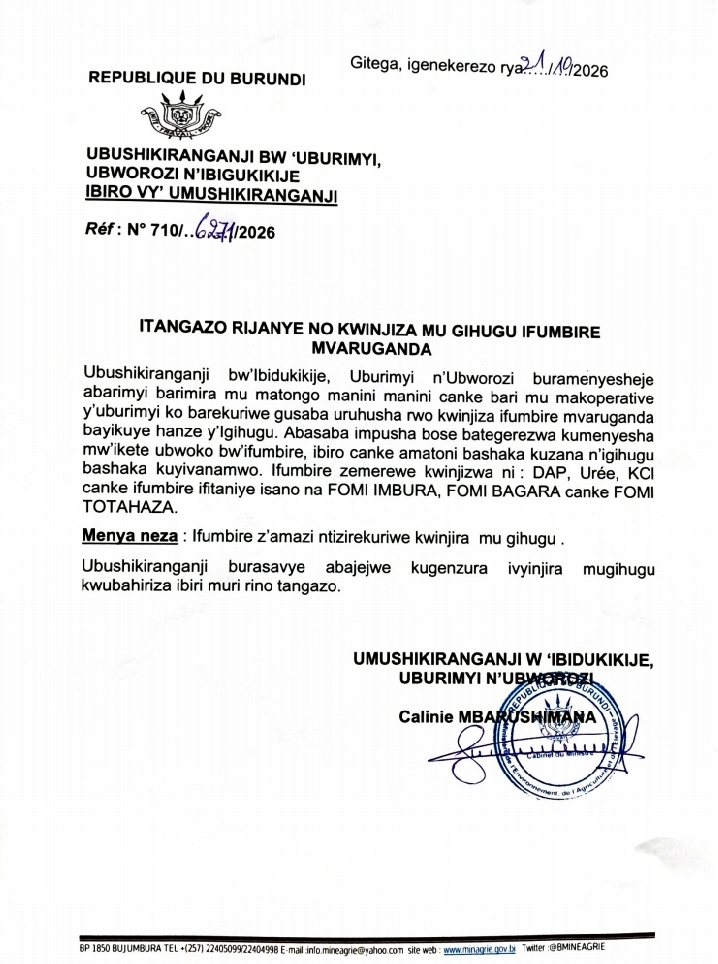
- Office of the President
- Ministry of Environment, Agriculture and Livestock
- Ministry of Finance
- Bank of the Republic of Burundi (BRB)
- Burundi Revenue Office (OBR)
- Independent National Electoral Commission (CENI)
- National Assembly
